
School Safety Keynotes, Training Presentations & Workshops
Practical strategies for leading, preparing, and communicating when school safety is on the line.
Keynotes, workshops, and staff school safety training led by Dr. Kenneth S. Trump, drawing on more than 40 years of independent, non-vendor experience in PreK-12 school safety.
School leaders and staff need more than awareness of the latest school safety concerns. They need practical ways to strengthen everyday security, prepare for emergencies, and make sound decisions under pressure.
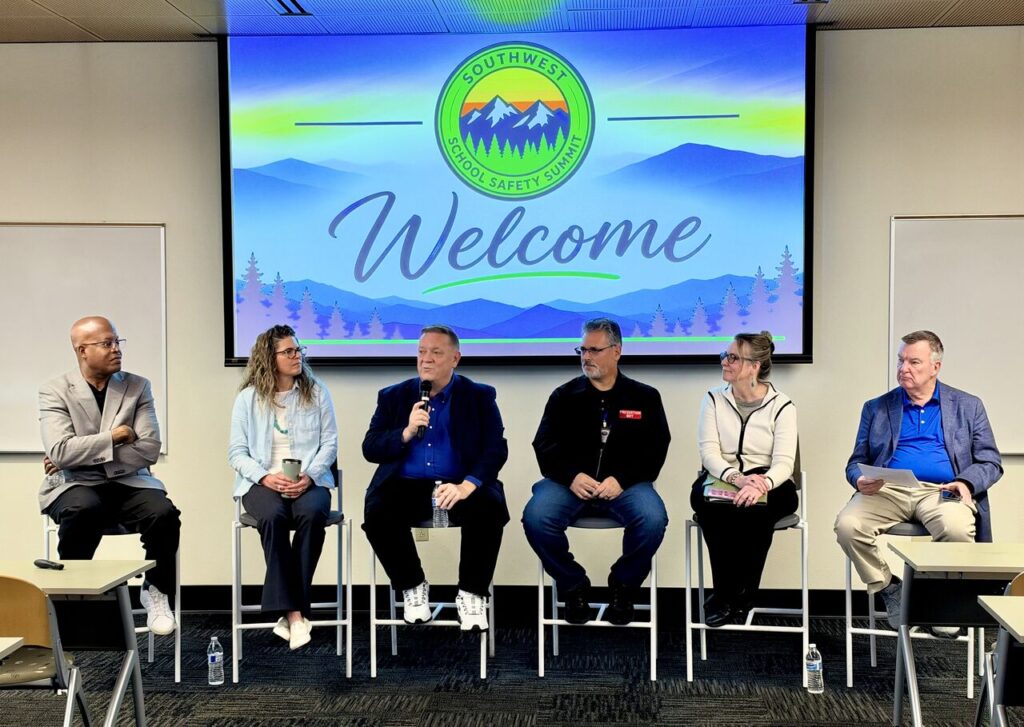
Looking for a School Safety Speakers Bureau? Our national roster includes experienced K-12 school leaders, crisis-response professionals, psychologists, law enforcement and school resource officer experts, researchers, communications leaders, and practitioners who provide keynote presentations, conference sessions, workshops, panels, and professional development.
Explore Our School Safety Speakers Bureau →
School Safety Keynote Speaker & Trainer: Dr. Kenneth S. Trump
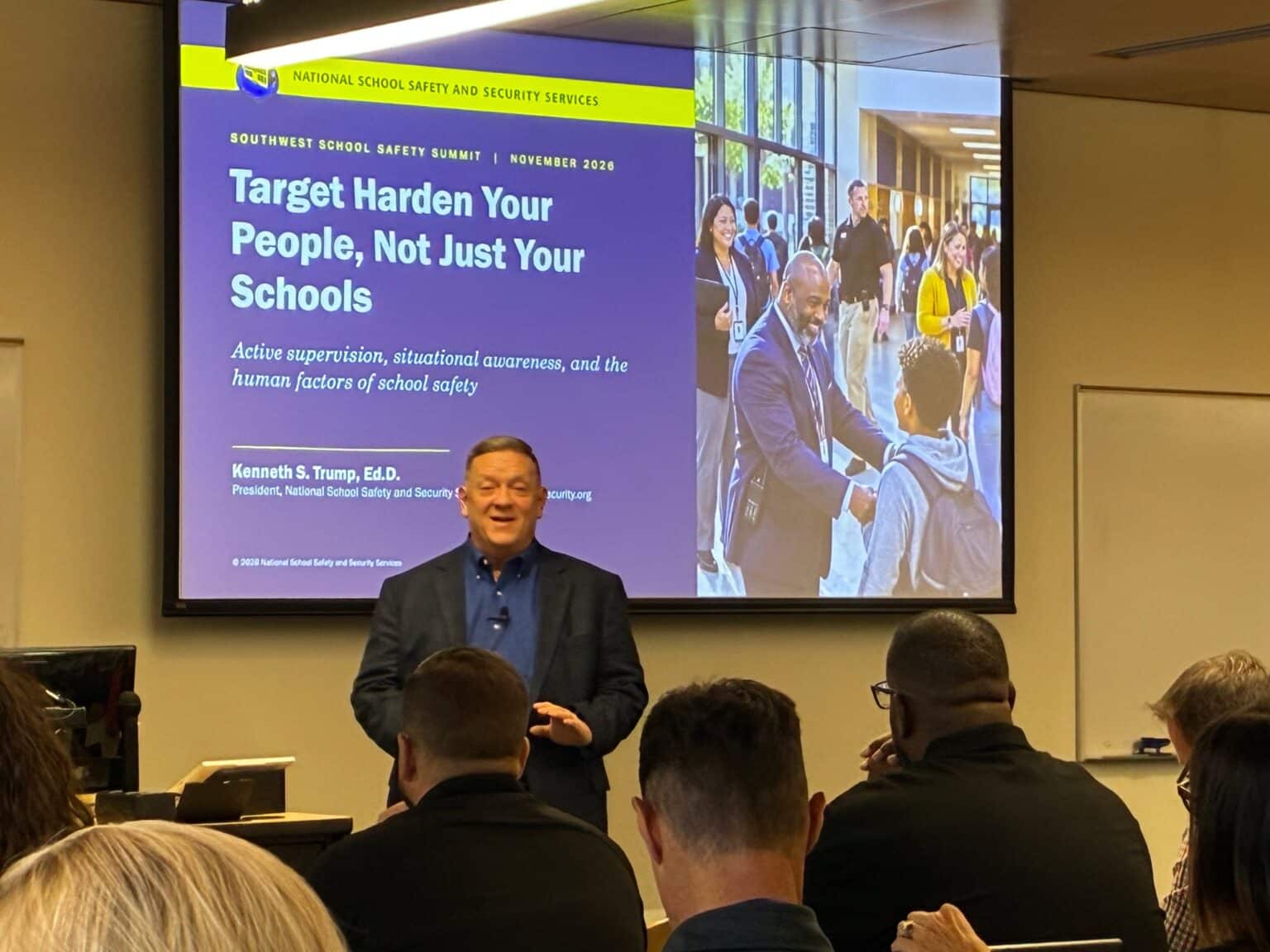
Dr. Ken Trump has spent more than four decades presenting school safety training to the people responsible for keeping students safe, from superintendents, principals, and school board members to state and federal policymakers, first responders, attorneys, academicians, and the media.
Dr. Ken’s approach emphasizes practical preparation, clear communication, and the people responsible for putting school safety plans into action. Programs are built for the audience in the room, not delivered off a shelf. Formats include keynote presentations, workshops and seminars, and facilitated planning sessions for school safety and crisis preparedness teams.
Whether you are planning a conference keynote, district professional development session, or focused leadership workshop, our school safety training is developed around your audience, available time, and desired outcomes.
School Safety Presentation & Workshop Topics
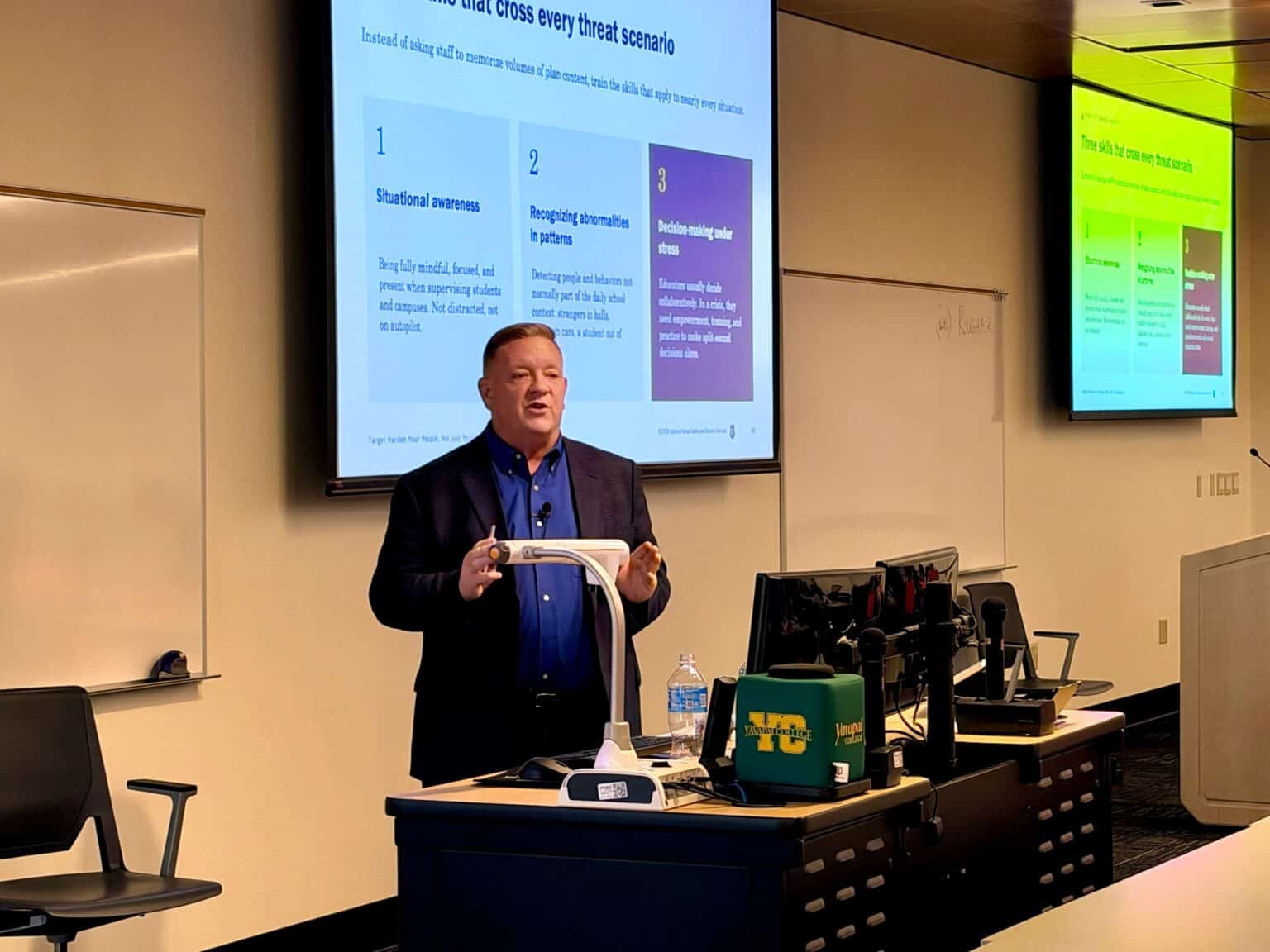
The following programs provide a starting point for planning your school safety training. Content, emphasis, examples, and depth can be tailored to your audience and format.
1. Strategic School Safety Governance & Communication in High-Ambiguity Environments
Policy, oversight, and fidelity of implementation for school boards and superintendents.
Most school districts have safety policies and emergency plans. Fewer can show that those policies are carried out on an ordinary school day, by the people responsible, and reported to the board. Risk lives in that gap between policy and practice. It is also what gets examined first after a serious incident, in the media and in the courtroom. There, the question has shifted from “Did you have a policy?” to “Did you follow it?”
Boards and superintendents now lead in a high-ambiguity environment. Social media outruns verified facts, threats and hoaxes demand judgment, vendors arrive quickly after high-profile incidents, mandates shift, and the next incident may not fit the plan. Dr. Kenneth S. Trump draws on more than 40 years of PreK-12 field experience and his work as a school safety expert witness. He shows how boards can govern safety with discipline while superintendents lead implementation, each in their own lane.
Participants examine:
- fidelity of implementation and the growing influence of litigation on governance
- the difference between security theater and meaningful safety
- due diligence before safety purchases
- human factors and training
- engaging students and parents
- communicating effort rather than guarantees
Scenario-based table discussions and peer “What works?” exchanges keep the session interactive. Participants leave with an action guide of practical steps for this week, the next 30 and 90 days, and the board’s annual calendar.
Key takeaways:
- Use oversight questions and reports that verify implementation without micromanaging operations.
- Apply a tactical pause and a due-diligence checklist before safety purchases, pilots, and policy changes.
- Recognize what is examined after serious incidents, and strengthen records, training, and follow-through.
- Communicate in a crisis with one voice, prepared statements, and no false assurances.
Ideal audiences: School board members, superintendents, cabinet and central office administrators, school business officials, state school boards associations, and regional education service agencies.
Suggested formats: Board association conference workshop (2 to 2.5 hours), board retreat or board-superintendent team session, leadership keynote (60 to 90 minutes), or webinar.
2. Target Harden Your People, Not Just Your Schools: Active Supervision, Situational Awareness, and the Human Factors of School Safety
When school safety failures are reviewed after serious incidents, in assessments, and in court, the questions rarely center on hardware. They center on people: supervision, training, communication, decisions under stress, and whether policies were actually followed.
This session is a significant paradigm shift. Instead of trying to get staff to remember a 100+ page crisis plan, it simplifies school safety around a short set of human skills that carry across many security threats and emergencies: active supervision, situational awareness, pattern recognition and the spotting of abnormalities, and cognitive decision making under stress.
Drawing on more than 40 years of frontline experience, expert witness work, and Johns Hopkins doctoral research, Dr. Trump examines the gap between policy and practice and how to prepare every adult to act. Attendees leave with low-cost actions they can start right away, including the Five-Minute Rule and role-specific steps for the next 30 days.
Key takeaways:
- Why failures reviewed after incidents, in assessments, and in litigation usually trace to people and implementation rather than hardware
- Why a 100+ page crisis plan that staff cannot recall is the wrong foundation, and which skills to teach instead because they work across many threats and emergencies
- How pattern recognition works in a school: knowing what normal looks like so abnormalities stand out sooner
- How to strengthen cognitive decision making under stress by simplifying what people are asked to remember and do
- Where the gap between written policy and daily practice opens up, and how leaders can test it
- How to prepare every adult in the building to act, since the designated safety team is often not the first to respond
- The Five-Minute Rule and role-specific, low-cost steps to start in the next 30 days
Ideal audiences: Superintendents, central office administrators, principals and assistant principals, school board members, school security directors and school-based police, crisis team members, and frontline staff including teachers, counselors, and support staff.
Suggested formats: A 60-minute keynote or breakout. Can be expanded to a 90-minute leadership session with discussion of policy-versus-practice gaps, or a half-day staff workshop built around skills practice and role-specific 30-day action planning.
3. Building and Sustaining Effective School Safety Teams
From formal structured teams to ad-hoc informal swarm teams: what makes teams functional, focused, and ready under pressure.
Many school crisis teams exist on paper but were never built, trained, or tested as a functioning unit. This session covers what separates a structured, functional team from an ad hoc swarm response: role clarity, training cadence, communication protocols, and the ongoing supervision that keeps a team and all school staff ready rather than rusty.
It also addresses a hard reality. The designated safety team is often not the group on scene when an incident unfolds quickly, so every adult must be prepared to come together and act.
Key takeaways:
- The difference between a formally designated team and a swarm team, and why schools need both
- From paralysis to confidence: Relieve administrator and staff stress that leads to inaction, and shift to the empowerment of all staff in sustaining a culture of school safety
- How to define the formal team roles, decision authority, and backups so the team functions when people are missing
- How training cadence and testing turn a team on paper into staff and teams that work under pressure
- Communication protocols within the team and out to staff, responders, and families
- The supervision and accountability that keep teams ready as membership and conditions change
- How building-level and district-level teams can work in alignment
Ideal audiences: Building and district safety and crisis teams, principals, assistant principals, deans, counselors, psychologists, social workers, school security directors and school-based police, facilities and operations staff, communications directors and public information officers, central office administrators, and first responder partners.
Suggested formats: A 90-minute workshop or half-day session in which teams work through their own structure and gaps. Also available as a 60-minute keynote or breakout on the foundations.
4. Proactive School Security and Emergency Preparedness Planning
Strengthening the everyday security practices and emergency preparedness systems schools rely on when something goes wrong.
Effective school safety depends on more than written plans or security hardware. Schools need practical security measures, clearly defined emergency procedures, trained staff, reliable communications, and strong coordination with first responders.
Drawing from Dr. Ken Trump’s book Proactive School Security and Emergency Preparedness Planning and more than four decades of K-12 school safety experience, this program focuses on practical school security and emergency preparedness strategies that can be realistically implemented and sustained.
Topics may include lockdowns and other emergency drills, evacuation decision-making, parent-student reunification, emergency notifications and communications, coordination with law enforcement and other first responders, staff roles and responsibilities, access and visitor management, crisis-team preparedness, and common gaps between written plans and actual practice.
Key takeaways:
- Strengthen practical school security fundamentals and day-to-day preparedness.
- Review best practices for lockdowns, evacuations, sheltering, and other emergency procedures.
- Improve the design and implementation of drills so they build readiness without creating unnecessary fear or confusion.
- Examine evacuation decision-making and the risks of moving large numbers of students during uncertain conditions.
- Strengthen parent-student reunification planning, including site selection, accountability, transportation, communications, and family verification.
- Improve coordination with law enforcement, fire, EMS, emergency management, and other community partners.
- Clarify emergency notification, internal communication, and parent communication responsibilities.
- Identify gaps between written emergency plans and what staff are actually prepared to do in real-world conditions.
- Establish practical priorities for training, exercises, review, and continuous improvement.
Ideal audiences: Superintendents, principals, district administrators, school safety leaders, crisis teams, school security personnel, and public safety partners.
Suggested formats: Conference presentation, professional development session, half-day or full-day workshop, or facilitated leadership and crisis-team training.
5. Strategic School Safety Communications in Times of Ambiguity and Heightened Anxiety
What a school says before an incident shapes public trust as much as what it does during one. Too often, school leaders communicate about safety only after something goes wrong, when emotions are high and facts are incomplete. As one school leader said, “When it comes to school safety, I don’t know what to say, how to say it, and when to say it.”
This session focuses on strategic school safety communications: proactively and honestly explaining to students, staff, parents, and the broader community what the school is doing, why, and what it can and cannot promise. It addresses how to communicate school safety in times of heightened anxiety or ambiguity, including how to avoid both harmful silence and premature certainty. It draws on Dr. Trump’s Johns Hopkins doctoral research in this area and more than four decades of advising school leaders.
Key takeaways:
- Why communicating about safety before an incident builds the credibility leaders need during one
- How to explain what the school is doing and why without promising safety or overstating certainty
- How to communicate when anxiety is high and facts are incomplete: what to say, when, and what to avoid
- How to tailor messages for students, staff, parents, boards, and the wider community
- How to set up predictable channels and message discipline before they are needed
- Why communications must match actual practice, so statements hold up after an incident, in public, and in court
- How to integrate school safety messaging into year-round communications to support creation of a culture of school safety
Ideal audiences: Superintendents, communications directors and public information officers, principals and assistant principals, school board members, school security directors and school-based police leaders, crisis team members, prevention and intervention staff, and leaders of support staff who field parent questions every day.
Suggested formats: A 60-minute keynote or leadership session. Can be expanded to a 90-minute workshop in which participants draft their own proactive safety messages, or a half-day session for a leadership and communications team.
6. School Support Staff Safety Training
School secretaries, custodians, maintenance personnel, food service employees, bus drivers, and other support staff play important roles in everyday school safety and emergency preparedness. This specialized training focuses on the real-world responsibilities of support employees, including situational awareness, emergency communications, supervision, de-escalation, managing difficult encounters, lockdowns, evacuations, reunification, and coordination with administrators and first responders.
Who Each Program Is For
Each presentation can be matched to the people who will use it.
Leadership programs
Superintendents, assistant superintendents, principals, cabinet and leadership teams, school board members, heads of independent or parochial schools, charter school heads, communications executives, school security directors and chiefs, police chiefs, and sheriffs.
Frontline staff programs
Principals, assistant principals, deans, crisis team members, psychologists, counselors, social workers, support staff (facilities, food service, health services, office, transportation), central office administrators, communications and public information officers, school security directors and officers, School Resource Officers, first responders, and community partners.
Who Are These School Safety Training Programs Designed For?
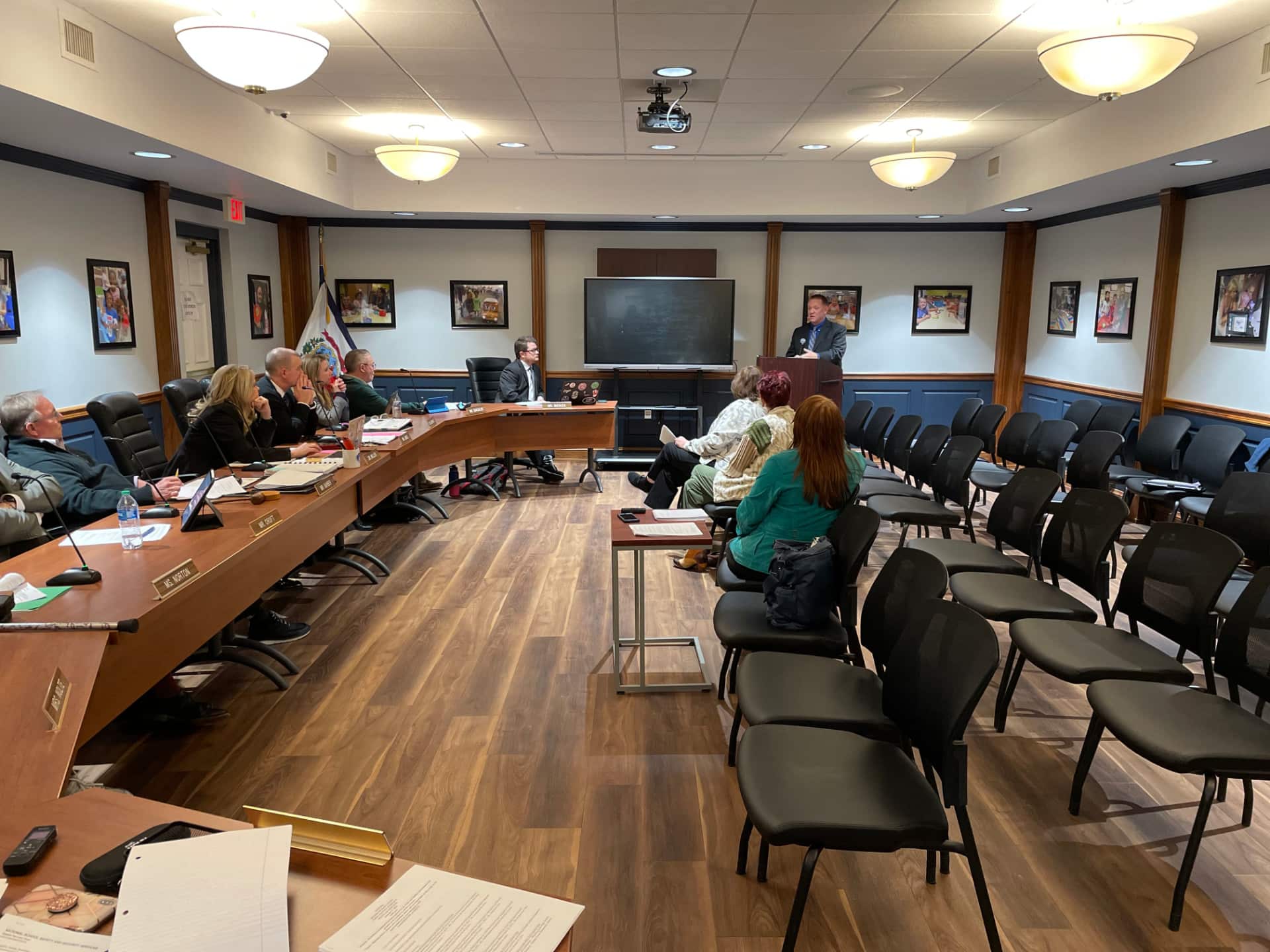
Dr. Ken Trump’s school safety programs are tailored for superintendents, school boards, principals and administrators, teachers and support staff, school safety and crisis teams, communications professionals, school resource officers and public safety partners, and leaders of public, independent, faith-based, and charter schools.
The responsibilities, experience, and needs of the participants guide the content and emphasis of each program.
Customized School Safety Keynotes, Staff Training & Team Workshops
Conference Keynotes & School Safety Presentations
Give participants a clear perspective on today’s school safety challenges while providing practical priorities and questions they can take back to their schools and organizations.
School Staff Professional Development & Workshops
Connect school safety concepts to participants’ actual responsibilities through focused instruction, discussion, practical examples, and application.
Facilitated School Safety & Crisis Team Planning Sessions
Bring leadership and safety teams together to examine concerns, clarify responsibilities, challenge assumptions, strengthen coordination, and identify practical next steps.
School Safety Speakers Bureau

Experienced K-12 School Safety Speakers for Conferences, Keynotes & Professional Development
Looking for an experienced school safety speaker or a team of presenters for your conference, education association, school district professional development program, leadership retreat, or special event?
Our School Safety Speakers Bureau connects schools, conference planners, associations, and other organizations with experienced professionals who bring practical and firsthand perspectives on school safety, school security, emergency preparedness, crisis leadership and communications, violence prevention, behavioral threat assessment, school resource officer partnerships, student mental health, crisis response, and recovery.
Our speakers include current and former school administrators, school safety professionals, law enforcement and school resource officer experts, psychologists, violence prevention specialists, and education leaders who have managed major school crises.
Programs can include keynote presentations, conference sessions, workshops, panels, leadership programs, exercises, facilitated discussions, and professional development.
Independent expertise. Practical experience. No product pitches.

Meet Our School Safety Speakers
Dr. Kenneth S. Trump
Strategic School Safety Leadership | School Security | Emergency Preparedness | Crisis Communication
Dr. Ken Trump brings more than four decades of frontline K-12 school safety experience. An independent, non-product-affiliated school safety expert, he helps leaders move beyond reactive measures to strengthen the people, systems, decisions, and relationships that shape safer schools.
Lessons from the Schoolhouse to the Courthouse: Dr. Ken’s programs focus on strategic school safety leadership, human factors and active supervision, school security and emergency preparedness, crisis decision-making, safety team effectiveness, and communicating clearly before, during, and after a crisis. Drawing on decades of consulting, training, assessment, media, and school safety litigation experience, Dr. Trump brings a practical perspective on what can go wrong, what claims deserve scrutiny, and what school leaders should be asking before the next crisis occurs.
Chuck Hibbert
School Transportation Safety | Emergency Planning | Security Assessments | School Police & SRO Partnerships
Chuck Hibbert brings more than three decades of school safety and law enforcement experience, including 21 years as Coordinator of Safety and Transportation Services for the Wayne Township Metropolitan School District in Indianapolis and twelve years with the Indiana State Police.
His presentations, tailored to each district through consultation, include Managing Behaviors in Education’s Most Difficult Environment: The Bus!, Is Your Emergency Plan Yours or the State’s?, and School Administration and School Police, SROs, or Security: Teammates or Tormentors?, along with programs on support staff training, school safety assessments, bomb and social media threats, and making the most of school safety resources.
Dr. Stephen Bucheli Bayne
Regional School Safety Collaboration | Interagency Emergency Preparedness | District Safety Systems
Stephen Bucheli Bayne, Ed.D., brings nearly four decades of K-12 experience to presentations, exercises, and facilitated discussions designed to help school leaders move beyond isolated safety and security initiatives and build sustainable, relationship-driven systems.
His programs include Building Regional School Safety & Emergency Preparedness Collaboratives, focused on bringing school districts and community partners together for meaningful planning, exercises, reunification, communications, Incident Command System and Emergency Operations Center preparedness, and other joint activities.
He also presents Creating a Multi-Layered Collaborative Safety System Within Your School District, helping leaders connect administrators, safety and security, risk management, transportation, facilities, communications, mental health professionals, law enforcement, and other stakeholders within a sustainable districtwide framework.
Dr. Asia R. Jones
Educational School Safety Leadership | Student Services | Student Mental Health | Threat Assessment
Dr. Asia Jones brings more than 30 years of public education leadership experience, including service as a teacher, principal, personnel director, executive director, and assistant superintendent for student services. Asia led student services teams in Virginia public schools with student enrollments ranging from 13,000 to 84,000 students. Her presentation experience includes school safety leadership development, student mental health, dropout prevention, threat assessment, and strategic Multi-Tiered Systems of Supports.
Wendy Davison, M.Ed., CPD
Behavioral Threat Assessment | Emergency Preparedness | Reunification | Behavior-Based School Safety
Wendy Davison is an experienced school administrator, school safety consultant, and presenter with nearly three decades in K-12 education. Wendy has been deeply involved in school safety and security initiatives, serving on threat assessment teams, emergency command staffs, and multidisciplinary task forces across multiple states. Her programs address behavioral threat assessment, emergency operations planning, crisis response and communications, reunification, school climate, and prevention-focused, behavior-based school safety.
Rick Kaufman, APR
Crisis Communication | Emergency Management | School-Community Relations | School Safety Leadership
Ricky J. Kaufman brings more than 30 years of leadership experience in Wisconsin, Colorado, and Minnesota school systems, specializing in emergency management, crisis response and communications, trauma-informed leadership, and behavioural threat assessment. In 1999, he served as Co-Leader of the Columbine Crisis Response Team following the tragic school shooting. His presentations equip education leaders to prepare for and navigate school emergencies, manage complex and rapidly evolving crises, and strengthen communication and coordination with families, staff, news media, and community partners.
Bobby Kipper
School & Community Violence Prevention | Behavior-Based School Safety | School-Based Policing
Bobby Kipper brings decades of law enforcement, school safety, and violence prevention experience to programs focused on long-term approaches to school and community violence. His background includes developing school safety programs, training school staff and first responders, police negotiation, school resource officer training, and behavior-based approaches to prevention and school safety.
Trent Lovett
School Shooting Response | Crisis Leadership | Reunification | Recovery
Responding to an Actual Violent Crisis
Former Marshall County Schools Superintendent Trent Lovett provides a firsthand perspective on leading a school district through the January 2018 Marshall County High School shooting and its aftermath. His presentation addresses the immediate response, first responders, reunification, media responsibilities, reopening the school, litigation, and challenges that continued in the weeks, months, and years following the tragedy.
Kirk Carpenter
Lessons From a School Shooting | Crisis Preparedness | Leadership | Recovery
When the Wolf Comes Knocking at Your Door, Will You Be Ready?
Kirk Carpenter draws upon firsthand experience as superintendent during the December 2017 Aztec High School shooting to help school leaders examine their own preparedness. His programs address school safety plans and drills, coordination with community response agencies, crisis leadership, recovery, school safety culture, and the everyday commitment required to keep students and staff safe.
John Calvert & Dr. Heather Calvert
School Administrator-SRO Partnerships | Education & Law Enforcement | Crisis Drills
John and Heather Calvert bring together two professional worlds that must work effectively together to keep schools safe: education and law enforcement.
John has served as a law enforcement officer, school resource officer, and state school safety director. Heather’s education experience includes classroom teaching, instructional coaching, assistant principal, principal, and principal coaching roles.
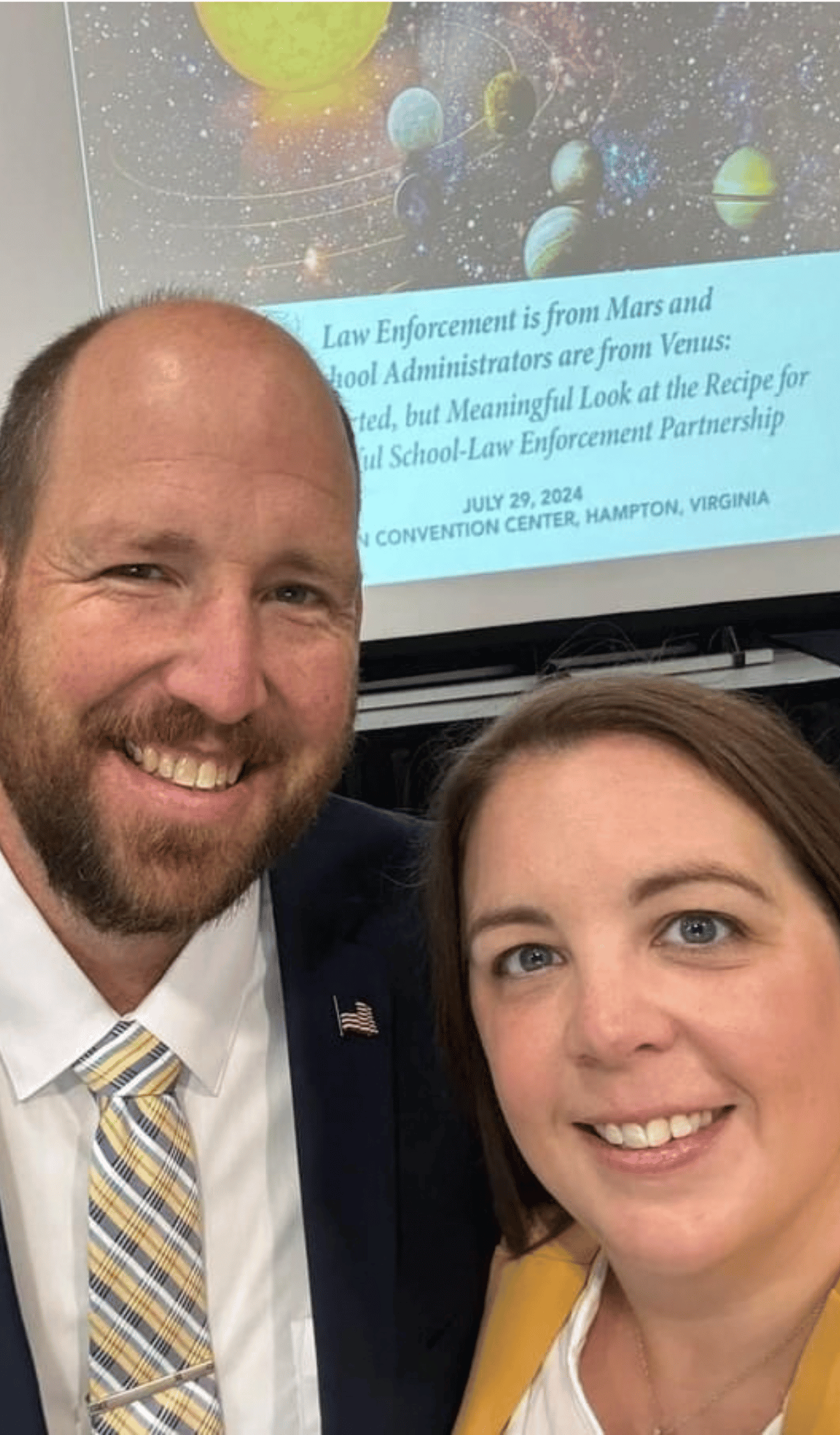
Their signature Merging Two Worlds presentation explores practical ways educators and law enforcement can strengthen relationships, understanding, and coordination rather than simply being expected to work together without strategic planning.
Chris Ellison
Student Transportation Safety | Behavior Management | De‑Escalation | Crisis Response | Transportation Leadership
Chris Ellison brings more than 30 years of pupil transportation experience, from special-needs school bus driver to Director of Transportation and Fleet Services for a large Oregon public school district serving 9,000+ students across 16 schools and five cities. He is a state-certified classroom and behind-the-wheel trainer instructor, Oregon DMV third-party tester, former president of the Oregon Pupil Transportation Association, national presenter, and experienced pupil transportation expert witness.
His presentations address the real-world safety and leadership challenges facing school transportation professionals, including student behavior management, bullying prevention, de-escalation, difficult parent encounters, active threats on school buses, crisis response, relationship-building, and transportation leadership. Chris combines frontline driving experience with decades of supervisory and training expertise to help transportation teams strengthen communication, judgment, preparedness, and professional practice.
Dr. Scott Poland
School Psychology | Suicide Prevention & Postvention | School Crisis | Threat Assessment
Dr. Scott Poland is a nationally recognized school psychologist and crisis expert with extensive experience presenting nationally and internationally. Scott spent decades leading psychological services for a Texas school district and is a Professor of Psychology and Director of the Suicide and Prevention Office at Nova Southeastern University in Fort Lauderdale, Florida. Scott has responded to provide post-crisis psychological services for the nation’s largest school shooting and school suicide crises. His programs address school crisis response and recovery, youth suicide prevention and intervention, self-injury, bullying and youth violence, threat assessment, parenting, and psychological services in schools.
Dr. Stephen Sroka
Trusted Relationships | School Safety | Well-Being | "Heartware" before "Hardware"
Dr. Stephen Sroka brings more than 50 years of experience in education, including teaching, administration, crisis intervention, and work with Native American communities. A National Teachers Hall of Fame inductee and nationally recognized school health educator, he is an international speaker, author, consultant, and adjunct assistant professor at the Case Western Reserve University School of Medicine.
School Safety, Well-Being and Leadership: Trusted Relationships with Heartware Before Hardware: This keynote focuses on trusted relationships as a foundation for school safety, well-being, and leadership. Dr. Sroka brings to life the 4 C’s: Communication, Collaboration, Cultural Competency, and Caring, while emphasizing “heartware” before hardware. Drawing on research, decades of experience, and his own cardiac-arrest survival during a school in-service, he also shares the Power of Many message and the importance of teamwork, resilience, and collective responsibility.
Dr. Christine Eith
School Violence Prevention | Student Connectedness | Social Bonding | Research & Evaluation
Christine Eith, PhD, brings a research-driven perspective to school safety, violence prevention, and student connectedness. A sociologist specializing in research methods, school violence, and delinquency, she helps school leaders understand how social bonding, relationships, school climate, and student connection can contribute to safer learning environments and reduced disruptive behavior.
Her presentations also help education leaders critically examine school safety research, distinguish evidence from assumptions, and apply research findings to practical PreK-12 prevention and improvement strategies. Dr. Eith serves as Department Chair of Advanced Studies in Education and an associate professor at the Johns Hopkins University School of Education.
Find the Right School Safety Speaker for Your Event
Not every audience needs the same school safety presentation. Our School Safety Speakers Bureau can help conference planners, education associations, school districts, independent and faith-based schools, and other organizations identify speakers whose professional experience and presentation topics fit their audience, priorities, and event.
Programs may include an individual school safety keynote speaker, conference presentation or workshop, a panel of school safety experts, a facilitated discussion or exercise, or a coordinated training program involving multiple presenters.
For programs involving Dr. Ken Trump and/or multiple members of our training team, National School Safety and Security Services can coordinate the engagement. For individual speaker requests, we can connect organizations directly with the requested speaker.
Looking for a School Safety Speaker?
Tell us about your event, audience, preferred dates, and the school safety topics you want to address.
School Safety Speaking Experience Across Education & Public Safety
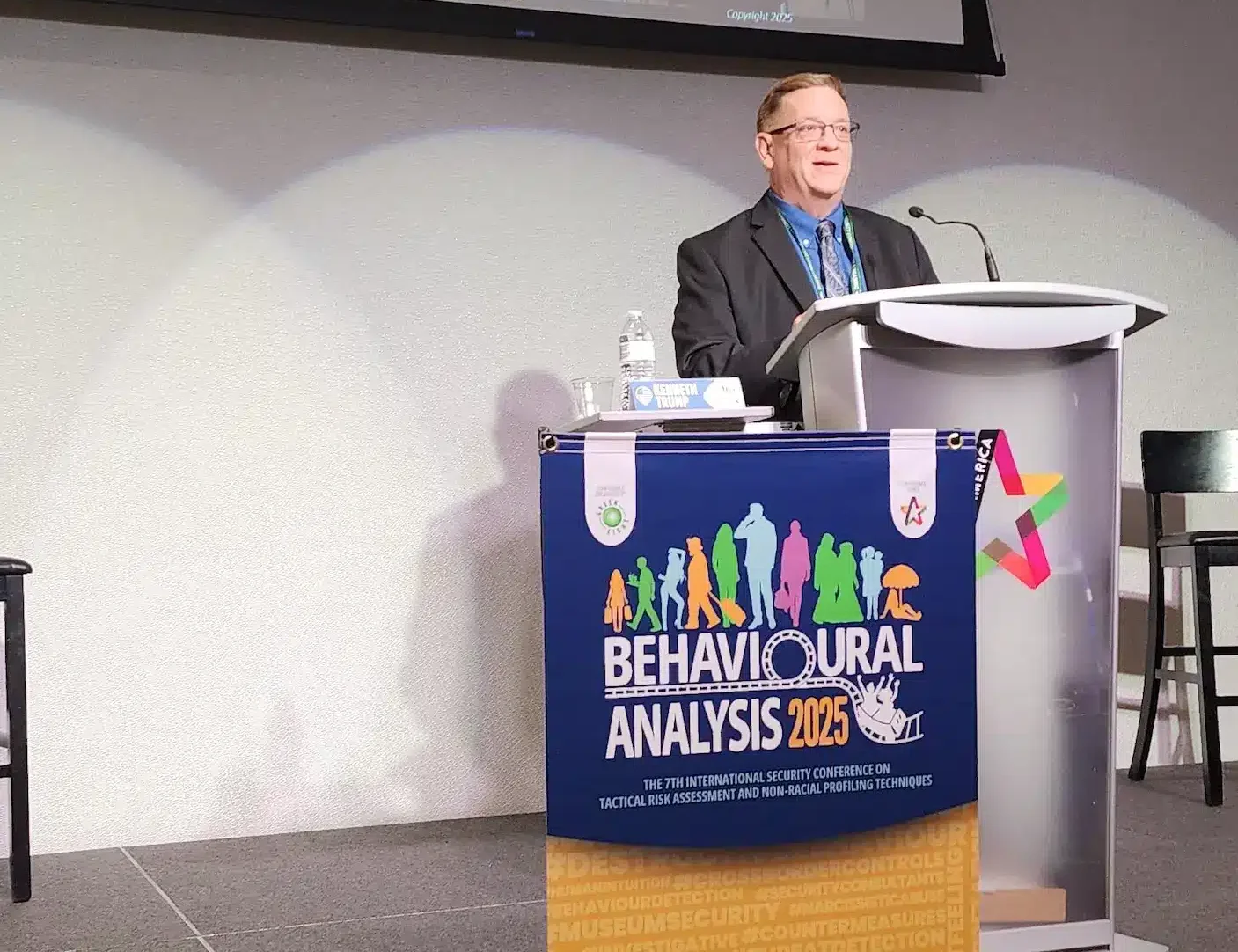
In addition to public, parochial, independent, and charter schools and regional education offices nationwide, examples include:
Education and professional associations — National School Boards Association, American Association of School Administrators, National Association of Secondary School Principals, National Association of Elementary School Principals, National School Public Relations Association, Association of School Business Officials International, National PTA, National Association of School Resource Officers, and state-level associations in Ohio, Texas, Wisconsin, Kentucky, Georgia, Montana, and Michigan, among others.
Law enforcement and emergency management — FBI National Academy, state police and gang investigator associations, state emergency management agencies, and regional community-policing institutes.
Government and public policy — U.S. Senate and House committees on education and homeland security, the U.S. Commission on Civil Rights, the U.S. Department of Justice and State Department, state departments of education, and state school-security commissions and task forces (including the Sandy Hook Advisory Commission and the New Jersey School Security Task Force).
Academic institutions — The Ohio State University, University of Virginia, University of Wisconsin, Purdue University, and Cleveland State University, among others.
- (Reference letters from past clients and engagements available on request.)
Frequently Asked Questions About School Safety Training, Keynote Speakers & Professional Development
School safety speakers can address a wide range of K-12 topics, including strategic school safety leadership, emergency preparedness, school security, crisis communications, behavioral threat assessment, violence prevention, school psychology and student mental health, school resource officer partnerships, active supervision, crisis response and recovery, tabletop exercises, school-community relationships, and lessons learned from major school safety incidents.
The strongest speaker choice depends on the audience, event objectives, and the specific school safety challenges the organization wants to address.
Start with the audience and the outcome you want from the presentation. A superintendent or school board audience may need strategic leadership, governance, or crisis communication expertise, while an SRO conference, student-services program, emergency preparedness event, or post-crisis leadership program may require a different professional background.
Look for direct PreK-12 experience, knowledge of research and school operations, the ability to communicate with diverse education and public safety audiences, and a willingness to customize the program rather than deliver the same presentation to every audience.
Our School Safety Speakers Bureau can help match a speaker's expertise, presentation style, and subject matter to your audience, format, and goals.
School leaders should look beyond presentation style or name recognition when selecting a school safety trainer. The trainer should understand how schools actually operate and be able to translate safety, security, emergency preparedness, and research into realistic PreK-12 practices.
Important qualifications and considerations include:
- Direct PreK-12 school safety, security, and emergency preparedness work experience.
- An evidence-based approach rather than reliance on fear, anecdotes, or product promotion.
- Independence from companies selling security products or technologies when objective guidance is expected.
- Knowledge of current research and the ability to apply it realistically in PreK-12 school environments.
- Education, training, and professional experience working in or directly with schools.
- Experience presenting to diverse audiences, including superintendents, principals, school boards, teachers, support staff, school resource officers, first responders, and community partners.
- Understanding of school climate, school culture, teaching and learning, and school-community relationships.
- Knowledge of age, developmental, behavioral, and psychological considerations affecting students.
- Ability to adapt strategies for elementary, middle, and high school environments rather than treating every school the same.
- Understanding of trauma-informed practices and the potential psychological impact of emergency preparedness and crisis response strategies.
- Ability to customize training to the responsibilities, experience, concerns, and goals of the audience.
Effective school safety training should strengthen professional judgment and preparedness without creating unnecessary fear or turning educators into security officers.
School safety training can address much more than physical security. Programs may include strategic school safety leadership, situational awareness and active supervision, emergency preparedness, crisis response, school safety teams, crisis communications, school security practices, behavioral threat assessment, reunification, school resource officer partnerships, crisis recovery, and the human factors that influence how people make decisions under stress.
The strongest program is one matched to the responsibilities and needs of the specific audience rather than a generic presentation used for every organization.
Yes. School safety responsibilities differ substantially among superintendents, school boards, principals, teachers, office personnel, transportation staff, school safety teams, communications professionals, school resource officers, and first responders.
Training should therefore be customized to the audience, grade levels served, organizational structure, program length, existing preparedness, and desired outcomes. A presentation for a school board or superintendent team should not simply be the same presentation delivered to classroom teachers or support staff.
A school safety keynote presentation generally provides a focused strategic message designed for a larger conference or association audience.
A school safety workshop allows more time for discussion, examples, problem-solving, and application of concepts to participants' own schools or organizations.
A professional development program can be designed for a specific school district or organization and may include role-specific instruction, discussion, exercises, team development, or facilitated planning.
The appropriate format depends on the audience, available time, desired depth, and intended outcomes.
School safety is a shared responsibility, but different employees have different roles.
Depending on the topic, training audiences may include:
- Superintendents and cabinet-level administrators
- School board members
- Principals and assistant principals
- Teachers and instructional staff
- Office and support personnel
- Transportation and facilities personnel
- School safety and crisis teams
- Communications professionals and public information officers
- School security personnel and school resource officers
- Mental health and student services professionals
- Law enforcement, fire, emergency management, and other community response partners
- Independent, private, faith-based, and charter school leaders
Training is most effective when the content reflects what participants are actually expected to do before, during, and after a school safety concern or crisis.
Effective school safety training should leave participants with more than awareness or emotional reaction. Participants should better understand their responsibilities, identify gaps in current practices, know what actions should follow the training, and be able to apply what they learned to their own school environment.
School leaders should consider whether the training resulted in clearer roles, improved communication, better preparedness, stronger coordination, and specific follow-up actions rather than simply whether participants found the presentation interesting.
About the lead trainer: Kenneth S. Trump, Ed.D., has worked in PreK-12 school safety, security, emergency preparedness, leadership, and crisis communications for more than four decades and has advised school and public safety officials nationwide.
Start with the audience and the outcome you want from the presentation. A superintendent or school board audience may benefit from strategic leadership and crisis communication expertise, while an SRO conference, student-services program, emergency preparedness event, or post-crisis leadership program may require a different background. Our School Safety Speakers Bureau can help match a speaker's experience and presentation topics to your audience, format, and goals.
Yes. Programs can include individual keynote speakers, multiple presenters, panels, facilitated discussions, workshops, or coordinated professional development involving several members of our School Safety Speakers Bureau.
A School Safety Speakers Bureau connects schools, school districts, education associations, conference organizers, and other organizations with experienced presenters whose expertise matches their audience and event goals.
School safety speakers may address topics such as strategic leadership, emergency preparedness, crisis response and recovery, school security, behavioral threat assessment, student mental health, school resource officer partnerships, crisis communications, violence prevention, active supervision, and lessons learned from major school emergencies.
An effective School Safety Speakers Bureau should offer more than a list of names. It should help organizations identify speakers with relevant PreK-12 experience, credible subject-matter expertise, strong presentation skills, and the ability to tailor content to school leaders, staff, public safety professionals, or other audiences.
Our School Safety Speakers Bureau includes current and former school administrators, crisis leaders, psychologists, law enforcement and school resource officer professionals, researchers, communications experts, and other practitioners. Programs may include keynote presentations, conference sessions, workshops, panels, facilitated discussions, exercises, and professional development.
Need an independent evaluation of your school's safety and security needs?
School Safety and Security AssessmentsLooking for strategic guidance on school safety leadership and decision-making?
Strategic School Safety Leadership ConsultationsLatest from School Safety Keynotes, Training Presentations & Workshops
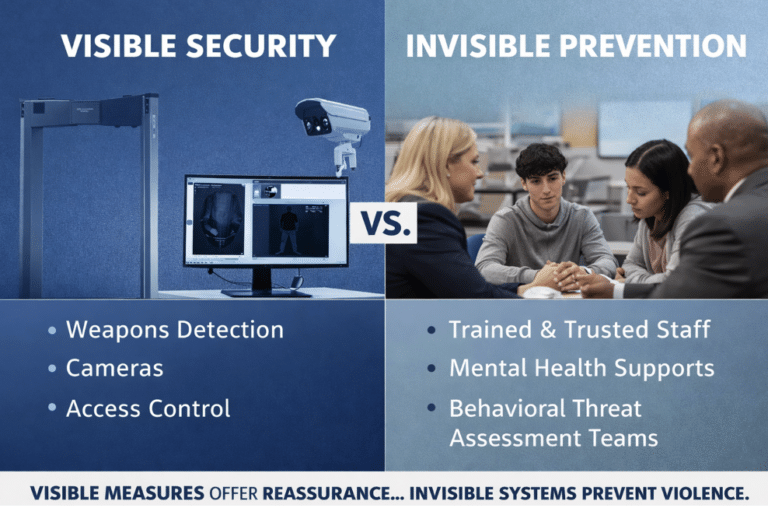
Dr. Kenneth S. Trump
President, National School Safety and Security Services
Dr. Kenneth S. Trump is President of National School Safety and Security Services, an independent, non-product-affiliated school safety consulting firm. With more than 40 years of experience in PreK–12 school safety, security, and emergency preparedness, he provides independent analysis and strategic guidance to school leaders nationwide.