
Ohio mother says son warned 2 adults about loaded gun at elementary school before anyone acted
A recent incident underscores a hard truth in school safety: even when students and staff do report concerns, the outcome still depends on what adults do next.
An 8-year-old student brought a gun to school at an Ohio elementary school.
Another student, age 9, saw it and reported it—twice, to two adults.
So far, the system worked.
Then it didn’t.
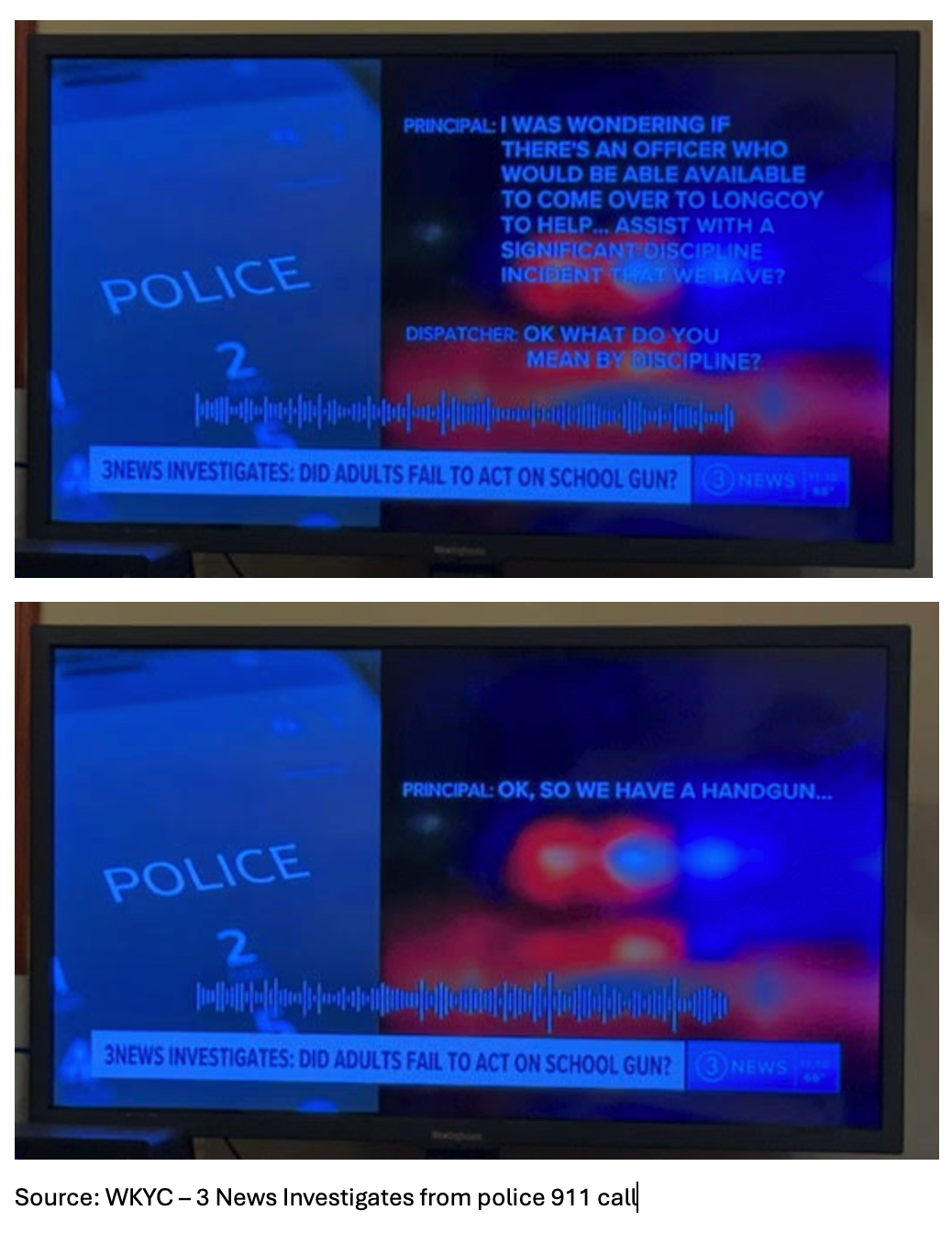
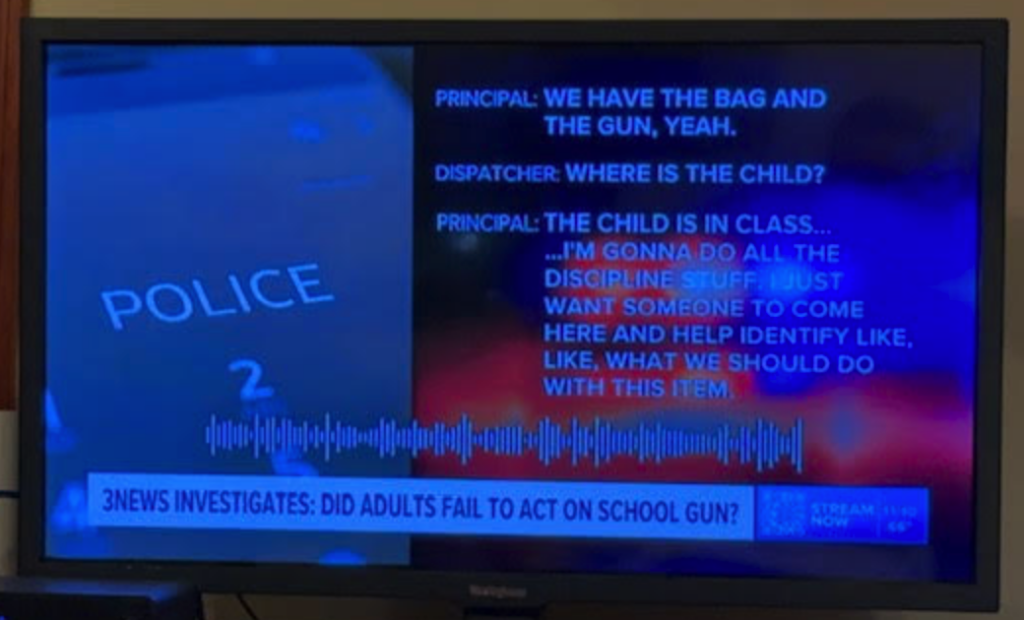
Staff response was reportedly delayed. A 911 call from the principal described the situation as a “significant discipline incident.” The dispatcher had to draw out the critical detail: it was a gun.
That hesitation matters. Police response is shaped by the information they receive. Calling a weapon a “discipline incident” slows clarity, creates confusion, and can cost valuable time.
Words Matter. Actions Matter More.
This wasn’t a gray-area situation.
- It was not a behavioral referral
- It was not a routine discipline issue
- It was a weapon on campus
Clear, direct communication is not optional in these moments—it is essential.
The Bigger Concern: What Happened Next
Reports indicate the backpack containing the gun was secured—but the student was left in the classroom.
That decision raises serious safety concerns.
Separating the student from the weapon is appropriate.
Leaving the student who brought a weapon to school in a classroom is not.
If a student brought one weapon, could there be another?
What if the student attempts to flee?
What if they harm themselves or others?
These are not theoretical questions. They are exactly why protocols exist.
School Safety 101: What Should Happen
When there is reasonable suspicion a student has a weapon, staff must move quickly, deliberately, and in a coordinated manner:
- Immediately remove and supervise the student
- Do not leave the student in a classroom or unmonitored setting
- Maintain constant adult supervision
- Secure and continuously observe the item
- Do not casually set it aside
- Maintain control until law enforcement takes custody
- Check for additional threats
- Weapons rarely exist in isolation without context
- Conduct appropriate searches based on reasonable suspicion
- Communicate clearly with 911
- Say exactly what you have: “We have a student with a firearm. The bag is secured.”
- Avoid vague or minimizing language
- Coordinate internally
- Ensure staff understand roles and responsibilities
- Avoid creating panic—but do not normalize a dangerous situation
Administrators have the legal authority to act. Under the Supreme Court case ruling in New Jersey v. T.L.O. (1985), school officials can search based on reasonable suspicion that a student violated a school rule or the law. This is a far lower threshold than the “probable cause” required for police to do a search.
This is foundational knowledge for anyone responsible for student safety.
The Gap Isn’t Technology—It’s Training
Incidents like this often spark calls for more technology: weapons detection systems, AI monitoring, and other high-tech tools.
But this case highlights a more fundamental issue:
- A student reported a concern
- Staff were notified
- A weapon was present
Yet breakdowns still occurred.
Technology cannot compensate for:
- Hesitation in decision-making
- Unclear communication
- Lack of confidence in protocols
- Insufficient training on real-world response
From “See Something, Say Something” to “Do Something”
Schools have invested significant effort into encouraging students to report concerns—and that’s important.
But reporting is only the first step.
Staff must be trained to:
- Recognize the seriousness of the report
- Act immediately and decisively
- Follow clear, practiced protocols
- Communicate accurately under pressure
This requires more than policies sitting in binders. It requires:
- Scenario-based training
- Repetition and reinforcement
- Leadership expectations for action
- Accountability for execution
Back to Basics
School safety is not a plug-and-play system.
It is built on people—how they think, decide, communicate, and act under pressure.
Before investing in the next new technology, school leaders should ask:
- Do our staff know exactly what to do when a weapon is reported?
- Have they practiced it?
- Can they communicate clearly with first responders?
- Will they act immediately—or hesitate?
Because in the end, safety doesn’t hinge on what we purchase.
It hinges on what we do.
See something. Say something. Then—know how to do something.
Watch the full WKYC 3 News Investigates story by Lynna Lai here: Mother says son warned 2 adults about loaded gun at Kent elementary school before anyone acted
Dr. Kenneth S. Trump is President of National School Safety and Security Services
National School Safety and Security Services
Experts You Can Trust!
Connect with Dr. Ken on Linkedin: www.linkedin.com/in/kentrump/
Follow Dr. Ken on X(Twitter) @safeschools
Visit and “Like” Our Facebook School Safety News Channel at: www.facebook.com/schoolsafety