
By Stephen Bucheli Bayne, Ed.D.
After nearly four decades working in public education, I have learned that some of the strongest school safety decisions do not begin with a consultant, a product demonstration, or the latest piece of security technology. They begin with relationships.
When schools and school districts have built strong, ongoing relationships with law enforcement, fire services, emergency management, public health, neighboring educational institutions, and other community partners, they already possess something extraordinarily valuable: a network of professionals who understand the community they are trying to protect. That local knowledge matters.
This is also why I believe there is significant value in using independent school safety, security, and emergency preparedness consultants who are not financially affiliated with manufacturers, vendors, or companies selling products and services.
The Question Should Come Before the Product
School safety technology continues to advance rapidly. Access-control systems, cameras, communication platforms, weapons-detection technologies, emergency notification systems, mapping applications, visitor-management systems, panic-alert devices, and countless other products are marketed to schools every day.
Many of these technologies can provide tremendous value when they address an identified need and are appropriately integrated into a school’s overall safety strategy.
A vendor or vendor-affiliated consultant may know a particular technology extremely well. What they may not know nearly as well is the school district, its operational culture, existing procedures, staffing capabilities, available resources, relationships with first responders, board policies, community expectations, or its appetite for implementing a particular security measure.
A recommendation can be technically sound and still be operationally wrong for a particular school community.
Strong Collaboration Changes the Conversation
Throughout my career in public education, I saw firsthand the value of building sustained relationships between school districts and the agencies responsible for responding when something goes wrong. We all know those relationships cannot be developed for the first time during an emergency.
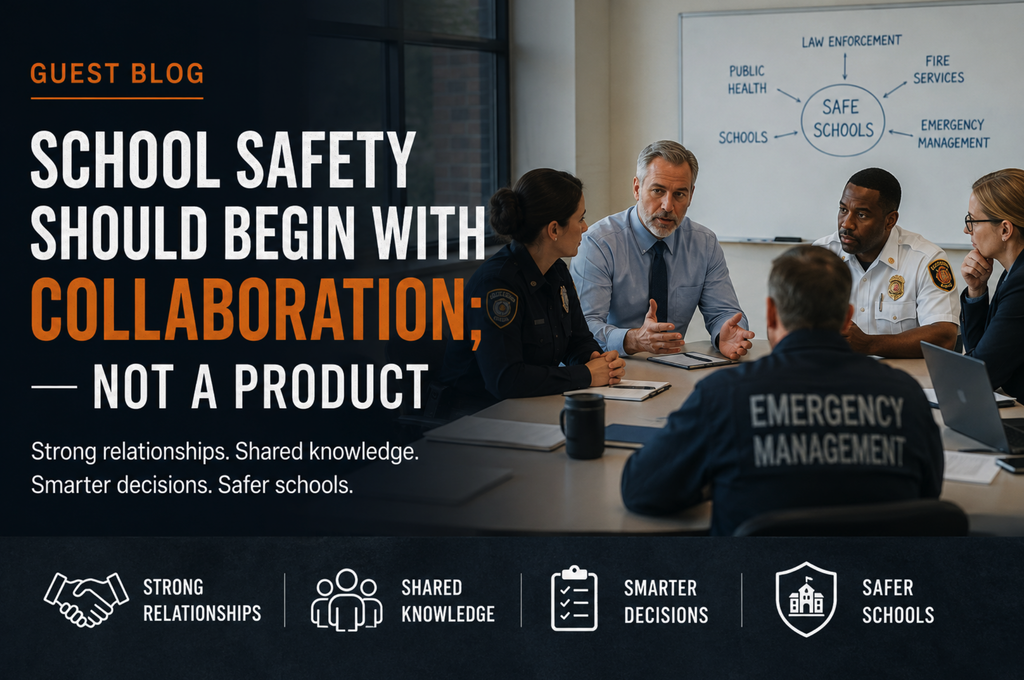
When school leaders regularly sit at the same table with law enforcement, fire personnel, emergency managers, public health representatives, hospitals, neighboring educational institutions, and other community partners, something important happens. Safety decisions become informed by the very people who understand the community.
Together, these perspectives create a much stronger foundation for decision-making than any single outside consultant can provide. That collaborative group may ultimately determine that additional cameras are needed. It may identify challenges in access control. It may conclude that a communication system needs improvement or that another type of safety technology should be considered.
But notice the sequence. The need was identified first. The product came later. That distinction is important.
Where the Independent Consultant Adds Value
There is absolutely an important role for experienced school safety consultants. The question is when they should be brought into the process and what role they should play.
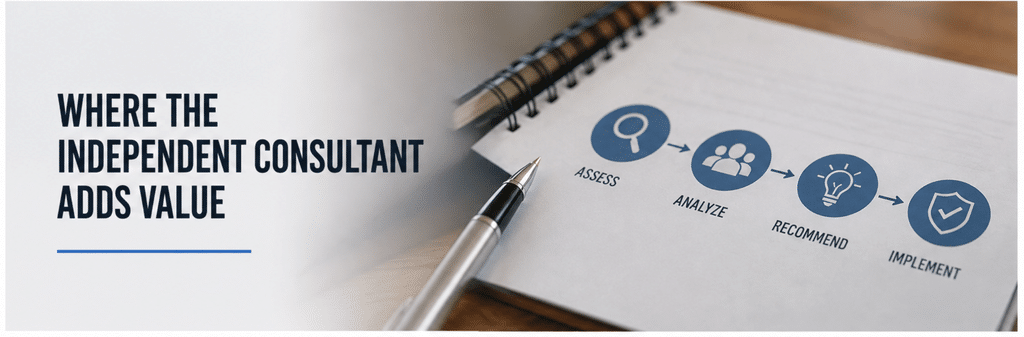
When a strong local school safety collaborative group has already determined that a particular piece of hardware or technology is needed, an independent consultant can provide tremendous value during the next phase.
For example, the collaborative process may determine that a school district needs to improve access control. An independent consultant can then help evaluate available manufacturers, systems, models, configurations, interoperability, operational requirements, scalability, maintenance considerations, training implications, and long-term sustainability.
The consultant is no longer trying to convince the district that it needs a particular product. Instead, the consultant is helping the school district answer a much more focused question:
“We have determined what we need. Now what solution best meets that need?”
An independent consultant should be able to evaluate competing solutions without having a financial interest in which manufacturer, vendor, platform, or service the school district ultimately selects. The recommendation should be driven by the school’s needs, not by the consultants’ business relationships.
When Collaboration Is Missing, Consultants Can Become the Default
Schools and school districts without strong, ongoing interagency and intra-agency collaboration may become much more dependent upon outside consultants to tell them what their safety program needs. That dependency can create risk if the consultant has not been carefully vetted.
A consultant with relationships with certain vendors or manufacturers may recommend a product that performs exactly as advertised. But that does not necessarily mean the product is appropriate for that school community.
Independence Does Not Mean Working Alone
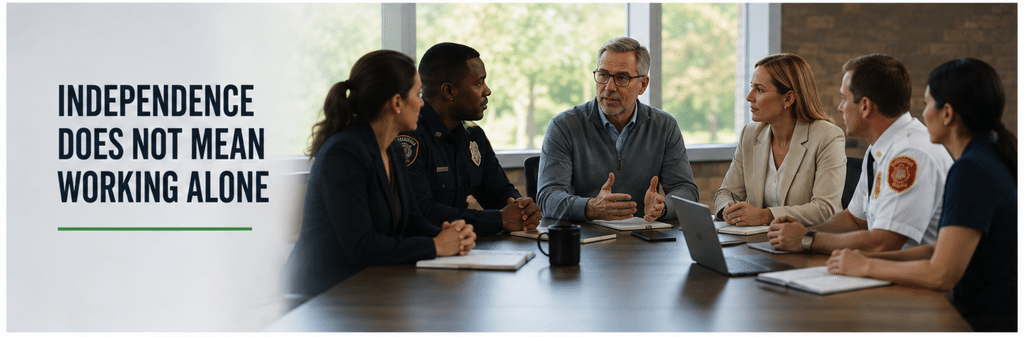
An effective independent consultant should actively engage the people who understand the school district and community best. That includes administrators, teachers, classified employees, facilities personnel, risk management, information technology, school security and/or police personnel, parents when appropriate, and outside partners.
School safety is an interconnected operational ecosystem. Physical security, emergency preparedness, supervision, communication, training, policies, relationships, organizational culture, and human behavior all influence one another.
A consultant who looks only at hardware will see hardware problems. A consultant who looks at the entire system is much more likely to understand whether hardware is actually the solution.
Build the Collaborative Foundation First
My advice to school leaders is straightforward: Invest in collaboration before investing in products.
Develop strong interagency collaborative groups with law enforcement, fire, emergency management, hospitals, public health, neighboring schools, local government, and other organizations that may have a role or interest in school safety.
At the same time, develop equally strong intra-agency collaboration within the school system. Bring together the departments and employees responsible for operations, instruction, facilities, technology, transportation, communications, student services, risk management, safety, and emergency preparedness.
Building that level of collaboration takes time. It requires the right person, or group of people, to champion the effort. Relationships must be developed, meetings must have purpose, and participants must see value in continuing to come to the table. It is a long-term commitment.
But in my experience, it is one of the strongest investments a school organization can make.
The Goal Should Be Greater Independence
Ultimately, a successful school safety consultant should not make a school district permanently dependent upon the consultant. The consultant should help strengthen the school district’s internal knowledge, decision-making capabilities, relationships, and systems.
A school district surrounded by trusted collaborative partners is better positioned to identify its vulnerabilities and challenges, understand its options, evaluate community expectations, and determine what solutions make sense locally.
When specialized expertise is then needed, an independent consultant can help the school district evaluate those solutions without beginning the conversation with a product already in mind. That is a fundamentally different consulting model.
School safety should not begin with what someone wants to sell a school. It should begin with understanding what the school needs.
Build the relationships. Strengthen the collaborative structure. Identify the vulnerability and challenges. Determine the operational need. Then evaluate the solution.
That sequence helps keep school safety decisions where they belong: centered on students, staff, the educational mission, and the unique needs of the local community, not on a product.
Stephen Bucheli Bayne, Ed.D., has 37 years of experience in California public schools, serving in leadership roles spanning K–12 school policing, risk management, safety, and emergency management. He is the Principal Consultant and founder of Framework Synergy Solutions LLC, a California-based consulting firm specializing in K–12 school safety, security, and emergency preparedness. Dr. Bayne is also a consultant to National School Safety and Security Services.