54,000 Alerts, Only 1% for Threats: Reality Check on School Panic Button Mandates
Published on April 8, 2026
Mandating Panic Buttons: “Feeling Safer” or Being Safer?
In the aftermath of school shootings, emotion understandably drives urgency. Legislators want to act. The public wants reassurance. Vendors offer so-called “solutions.”
And increasingly, that “solution” has taken the form of state-mandated wearable panic buttons under laws such as Alyssa’s Law — now enacted in more than a dozen states and counting.
But urgency without discipline leads to poor policy. And in this case, it risks turning well-intentioned efforts into expensive security mandates enacted under the guise of “school shootings” but in reality used more for everything except an actual threat.
The Sales Pitch vs. The Reality
Panic buttons have largely been sold on a simple premise:
“If every staff member has a panic button, it will help prevent or speed response to a school shooting.”
It sounds compelling. It feels right.
But the actual data tells a very different story.
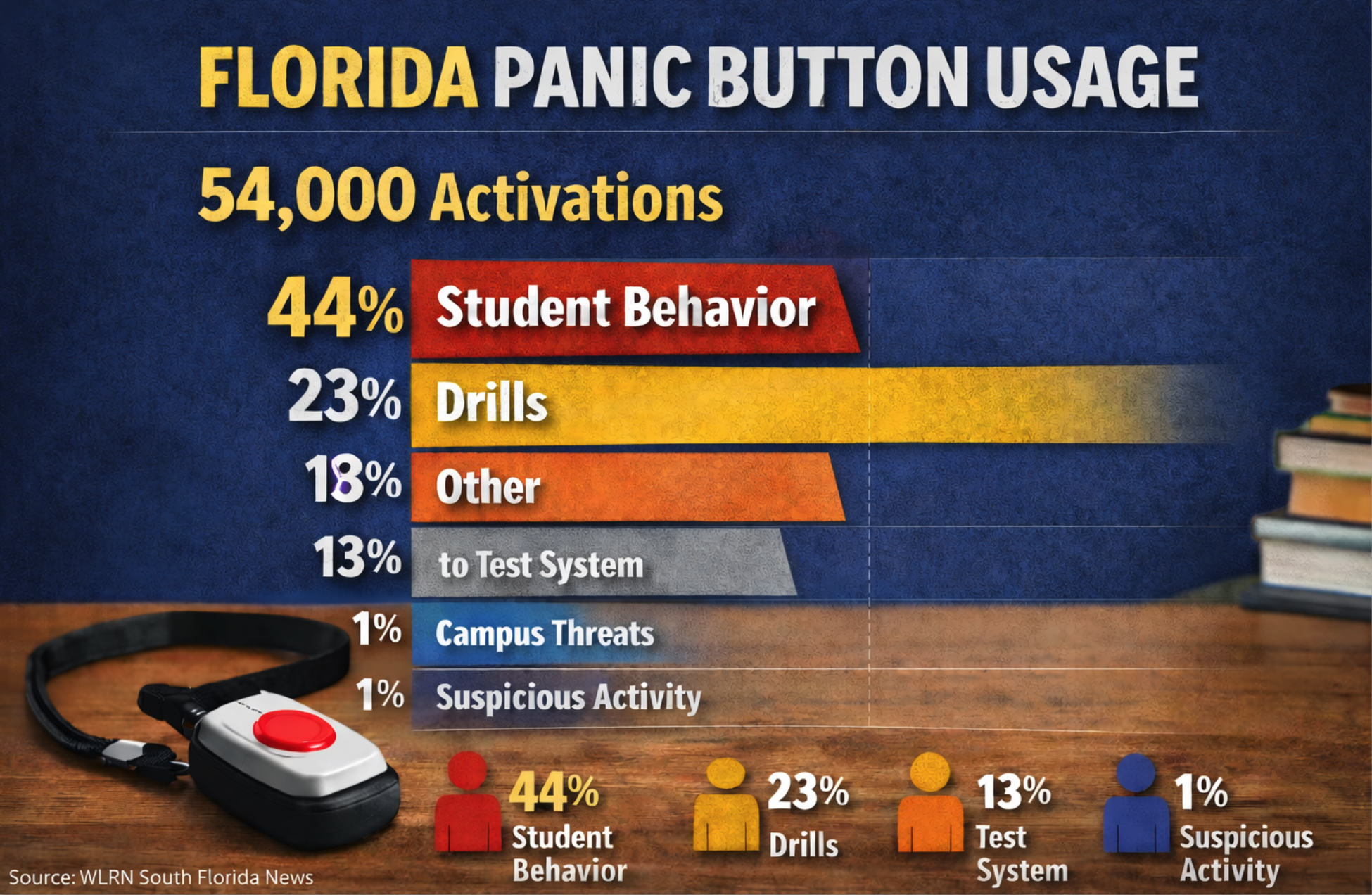
A recent report on Florida’s statewide mobile panic alert system found:
The overwhelming majority of activations had nothing to do with imminent life-threatening emergencies—let alone active assailant events.
The Problem With Policy Driven by Perception
Advocates often argue that panic buttons make staff feel safer.
But public policy — especially unfunded mandates — cannot be based on feelings alone.
When states require schools to adopt specific school security hardware or technologies:
Without sustained funding
Without local risk-based justification
Without evaluating implementation demands
Without examining actual use data
…they are legislating optics, not outcomes.
This is how we end up with:
Devices purchased but poorly integrated
Staff inconsistently trained
Systems overused for routine issues
And critical functions diluted by noise
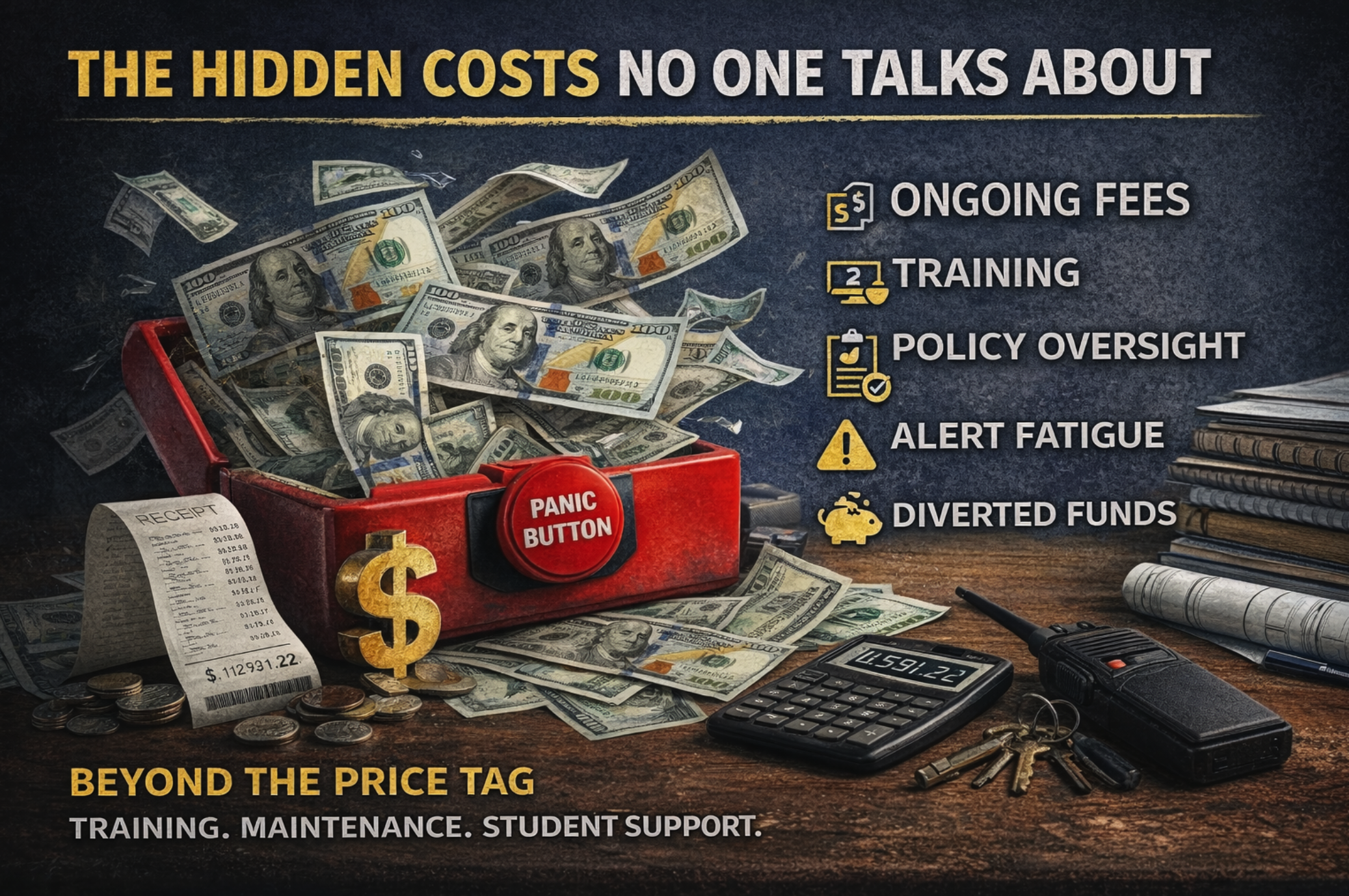
The Hidden Costs No One Talks About
Like many school safety mandates, panic button laws are often:
Unfunded or underfunded
Focused on initial purchase—not lifecycle costs
Silent on training, maintenance, and system management
The real costs include:
Ongoing subscription/licensing fees
Staff training and retraining
Policy development and oversight
Integration with first responders
Alert fatigue from overuse
And most importantly:
Opportunity cost — dollars diverted from proven needs like supervision, student support services, and basic, reliable security infrastructure.
When “More Technology” Becomes Less Effective
If nearly half of alerts are tied to student behavior—and only about 1% to actual threat—then we have to ask:
Are we solving a school shooting or other active assailant problem?
Or are we buying a generalized communication tool under the banner of school shootings?
Because those are two very different things.
And when everything becomes an “alert,” nothing stands out as urgent.
That’s not enhanced safety—that’s diluted signal.
Mandates vs. Meaningful Decision-Making
Here’s the core issue:
Mandates remove professional judgment.
If a district conducts a comprehensive school security assessment and determines that panic buttons:
Fit their operational needs
Integrate with their protocols
Are sustainable long-term
…then move forward if the local school board, administration, staff, safety teams, and community agree it is a wise expenditure.
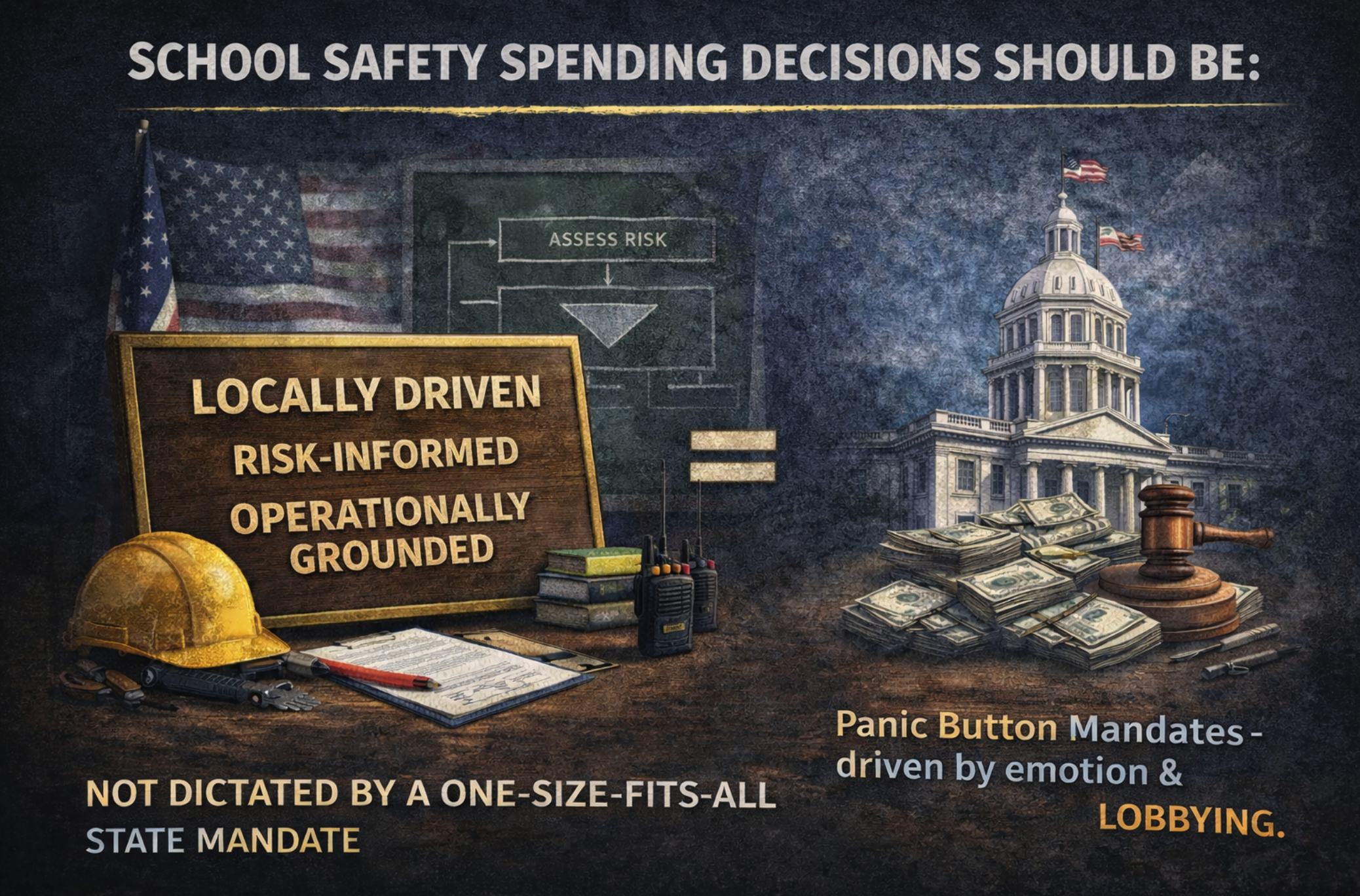
But that decision should be:
Locally driven
Risk-informed
Operationally grounded
Not dictated by a one-size-fits-all state mandate driven by emotion and lobbying.
And if the state mandates are not enough, some advocates are lobbying to make school panic buttons a federal mandate.
A Familiar Pattern: Security Theater in Action
We’ve seen this before:
Technology marketed with emotional appeals
Policymakers pressured to “do something”
Mandates passed without full cost or implementation analysis
Schools left to figure it out—often without adequate funding
And the result?
Layers of new products, technology, and implementation challenges with heavy budget implications and possibly unintended consequences.
Final Thought
Panic buttons are not inherently bad.
But mandating them—based on lobbying rather than real assessed security risks and budget considerations — is.
School safety is not about mandating what legislators believe makes people feel better in the moment. It’s about what local school communities can do best to meet their unique school safety needs with limited resources.
And that requires:
Thoughtful leadership
Local decision-making
Investment in people, not just products
And a relentless focus on implementation over intention
Because at the end of the day:
School security is not a plug-and-play sport.
And no button—no matter how well marketed—can replace that.
Dr. Kenneth S. Trump is President of National School Safety and Security Services
National School Safety and Security Services
Experts You Can Trust!
Connect with Dr. Ken on Linkedin: www.linkedin.com/in/kentrump/
Follow Dr. Ken on X(Twitter) @safeschools
Visit and “Like” Our Facebook School Safety News Channel at: www.facebook.com/schoolsafety